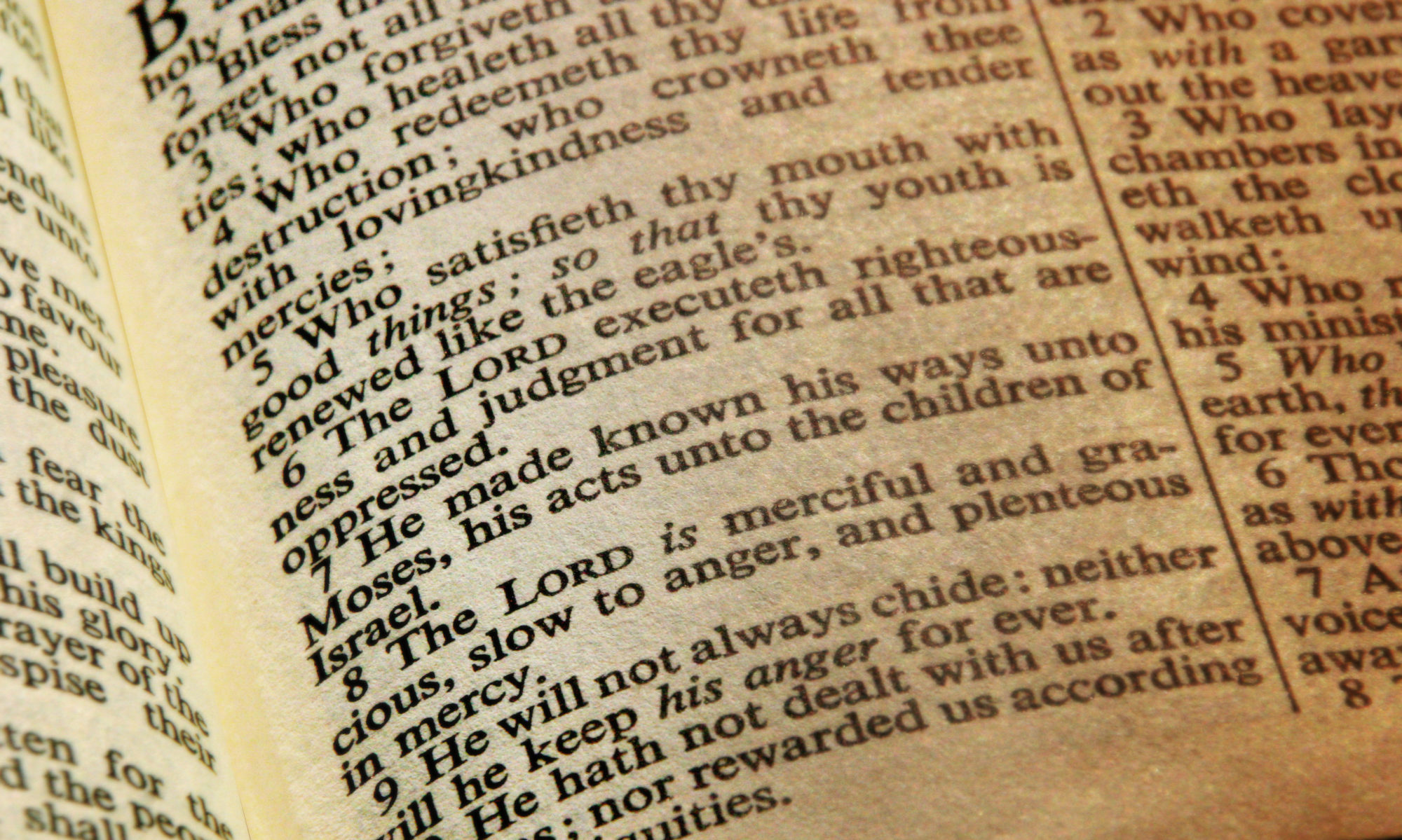

The psalms can be divided into three types (first done by Walter Bruggemann). First, songs of orientation that in a basic way orient ourselves towards God, casting the world in a simplified form and ourselves as faithful followers. Then, songs of disorientation, when the simple worldview of the initial psalms are upended by confusion, pain and disconnection. Finally, songs of new orientation, the emergence from those times of struggle into a new, more mature relationship with God. Psalm 143 falls best into the disorientation category.
In the psalms, we see various descriptions of human nature: the soul, the real self and appetites; the spirit or breath, our emotions; and our heart, best understood as our mind, the part that is supposed to know right from wrong. Our hearts are broken, and so are ruled by our emotions and appetites, not by that understanding of right and wrong.
Psalm 143 opens and closes with reflection on the righteousness of God. It then moves directly into a request that God not judge the singer based on their deeds. This is directly reversed from psalms of orientation like psalm 7, when he specifically asks to be judged based on his righteous deeds.
He then moves into the meat of the prayer: his enemy is closing in and it is causing emotional turmoil within. It is on one hand a foxhole prayer, written while David is hiding from Saul or the Philistines. On the other hand, the specific enemies are not named, because this is a song written to be sung by many people, all of whom have enemies, whether physical or spiritual.
He comes to God, then (and us with him) thirsty like a parched land. We can easily have our need God dulled by the pleasures of the world, and it is only when that world has fallen apart on us that we truly feel the desperate that within us.
Attached to all this, he hopes that this feeling of abandonment does not mean God has turned His face from him, that this temporal darkness does not have eternal significance.
He then moves into five specific requests, paired with the reason for these requests – notably, not because of his own righteousness. Answer me quickly, do not hide your face, bring me word quickly, show me your will, rescue me from my enemies. The reasons given are not based on David’s abilities (or ours), but rather on the nature of God Himself and the trust that David places in Him.
So David brings faith rather than righteousness. He brings no currency to the transaction, only faith that God will rescue him based on three things: His name’s sake, His righteousness and his unfailing love.
The term “unfailing love” literally means “cut a covenant” with the implication of blood. God specifically made covenants with David, that he would be king, live a long life, that his son would build the temple, and the Messiah would come from his line. For God to keep these promises, God must rescue David from his troubles. From that perspective, it is fairly cold and impersonal. It gets to the unfailing part, but not the love.
The second component to the righteousness of God are the parts of His character that lead him to make these promises to begin with. God is the one who created the relationship with David (and us!) not the other way around. God has rigged the entire situation so that our faith is substituted for righteousness. His righteousness is unfailing in its commitment, and love in its motivation. When David appeals to God’s righteousness, he is appealing to the love and mercy of God, not to His perfection.
What do we learn ourselves from Psalm 143? Primarily, that we can call on God based not on our righteousness, but His. We do not have the individual covenant that David did, but instead we have Christ as our representative. Like David, we have no currency of righteousness. If we, through faith, are linked to Christ, then all the promises of God to Christ fall to us. Through faith, we become the anointed ones, and Christ’s story becomes our story, His unending currency righteousness becomes ours.
This means that the first step in calling on God is to connect ourselves to Christ. We need Him as our mediator. If we have done this but still pray from a place of self-righteousness, entitlement and pride. Are we angry at God for not responding in the way we desire or expect? Are we putting ourselves up as judges of God? Or are we on the other end of the spectrum, disheartened by our own sin, we pray (or fail to pray) out of our own sense of unrighteousness. We are called to boldness, not based on our abilities but on the imputed righteousness of Christ.
As Martin Luther is said to have written:
For feelings come and feelings go, and feelings are deceiving;
My warrant is the Word of God, Nought else is worth believing.
Though all my heart should feel condemned, For want of some sweet token,
There is One greater than my heart, Whose Word cannot be broken.
I’ll trust in God’s unchanging Word, ‘till soul and body sever;
For though all things shall pass away, His Word shall stand forever.
– Sermon Notes, Brent Rood, Seed Church, Lynnwood, WA, August 27, 2017
Psalm 143
Something went wrong with the bible. Please make sure that you are requesting a valid passage! If this problem presits please contact joshuawiecorek@outlook.com