Peter here is trying to accomplish the very human task of identifying the minimum amount required to remain in good standing. But Jesus approaches this math question with a calculation that turns it all upside down.
The forgiveness math is hard enough – we’re supposed to forgive people who have harmed us 490 times? But then Jesus tells a story of a man forgiven millions who then in turn abuses a man who owes him a fraction. The comparison math spirals out of control to convey that the way of God is exponentially, infinitely more forgiving than we can match or understand.
We live under the banner of this infinite grace, and so we are called to live up to that grace, to have our hearts changed by that grace and seek to extend that same grace to those around us.
Being human, we know we will fall short of that level of forgiveness – but even then, the grace of God is there for us! It covers over our failures, while also calling us and enabling us to do and forgive more.
This is ultimately a justice issue. Where in our society do we grab others by the throat, to throw them in to prison preventing them from paying, until they can make the payment they are prevented from making. The servant in the story was extend a vast amount of privilege, and held the power in his hands to forgive. But instead of exercising that power to extend that same privilege he was given, he presses his rights and seeks to build upon that privilege rather than expand it.
In the math of the Gospel economy, 10,000 bags of gold = 0. 100 pieces of silver = 0. All our sins and failures = 0. All the sins against us should fall out the same way.
— Sermon Notes, Dave Sim, Renew Church, Lynnwood WA, September 20, 2026
Kids are finely attuned to fairness, at least insofar as unfairness impacts them directly. As adults, we really don’t lose that feeling. Sibling rivalry, group project, new friends, as well as deeper and more meaningful social and economic inequities. At the end of the day, much of our feelings on this topic are driven by comparison.
And this parable brings it home, with maybe the most relatable frustrations in all of scripture. Why should someone get the same amount for a fraction of the effort and output? It’s really and truly unfair.
But the focus on fairness, as this story shows, is misguided. At the end of the day, God does not want an economic, transactional relationship with us. We can’t compare ourselves to others, because God’s love for them is just as infinite for them as it is for us. The relationship He wants with us is not about an exchange of services or a reward for merit. It is the love of a father for His children.
In Jesus’ day he was addressing leaders like the Pharisees who saw themselves as more meritorious and more deserving than others. He pushed against the ethnocentrism and elitism of groups like this and warned his disciples against reconstituting the same systems themselves.
And we must continue to push against that envy and comparison in our spiritual lives. Whenever we see ourselves as superior to or more deserving of others, we need to remember that we are just as broken and needy as anyone else. Our heritage, our works, our service, our Bible reading, our Sunday school teaching, none of that is the cause of God’s love for us (in fact, they are the result!).
We will not earn God’s blessings or rewards. I Christ’s love and power we are lifted up to new life.
Finally, one other thing to consider – these workers were not sitting at home lounging when they were hired. They were out in the marketplace seeking work, failing all day until rescued at the eleventh hour. The landowner sees them and has compassion, giving them both meaning and the living wage they need.
Sometimes we are the strongest, most skilled and most well-connected people chosen first. When that’s the case, we must look out for those still waiting in the marketplace, and seek to join in the Landowner’s work of justice and compassion.
And sometimes we are the ones still standing at the marketplace, burning daylight while accomplishing nothing in growing frustration and desperation. In those moments, we can rest in the knowledge that at the end of the day God’s love for us is not one iota changed, our value to Him remains immeasurable.
— Sermon Notes, Dave Sim, Renew Church, Lynnwood WA, September 13, 2026
James & John here make a request that directly cuts across warnings that Jesus has given elsewhere, like in Luke 14 where he specifically tells his disciples not to take the places of honor at banquets – with very practical advice that actually is about how to get to those places of honor.
So Jesus goes deeper here. In the economy of the world, greatness is climbing, but in the Gospel economy, greatness is descending.
All of us have areas where we want to get the glory, whether work, sports, volunteering, hobbies. We want everything to be going “up and to the right” whether money, career, capabilities, popularity. But the upside down kingdom of God has something else to say – blessed are the poor, the weak, the mourning. We must lose our lives to live and love those that we hate. Greatness only comes from being the least. Service is the only true power.
Sometimes we see this more like a savings account or policy – we just defer our power and glory until heaven, when we’ll finally get what we deserve. But looking at it this way does not actually put us into the posture of submission and service and humility that Jesus calls us to. Jesus says that the Kingdom of Heaven is about sacrificial love, not about deferred gratification.
And so when Jesus hears this question, His first thoughts are for the ultimate sacrifice that He is headed for. His trajectory is the opposite of what these Sons of Thunder are looking for.
Here in the Pacific Northwest, we have a clear metaphor in the salmon, which swims hard against the current in order to sacrifice itself to bring about new life.
The salmon does not get to see that new life, and sometimes that’s what it feels like for us. We look around us and we see the bad guys win, we see the powerful abuse that power, we see the oppression of the weak.
The temptation is to fight and to respond to the World in kind. But Jesus calls us to slow down and find compassion, find places to serve, to give of ourselves to those around us.
— Sermon Notes, Dave Sim, Renew Church, Lynnwood WA, September 6, 2026
Jesus often used parables to convey the “vibe” of the Kingdom of Heaven, and to articulate the culture and economy that the people of God are called to. His stories contextualize the nature of God’s kingdom in ways that can be absorbed at a basic level.
The first stories are about exponential growth. First, a tiny seed growing into a mighty tree – a small thing changing over time to become a shelter for birds and creatures. Likewise, the yeast in bread works through the dough to raise it into the fluffy nourishing goodness of bread.
The next stories are about incredible value – a treasure buried in a field that is worth more than the field itself, the perfect pearl worth more than all the goods of a merchant. It’s the kind of value that turns radical behavior into the only logical option.
Why did Jesus tell Parables? First, He sought to reveal and conceal the Kingdom at the same time. Not everyone in his audience had open hearts, and so in an effort not to “cast pearls before pigs,” he shrouded some truths behind stories, explaining the specifics in more detail to those who were in direct relationship with Him.
Along today lives, the parables invite engagement and response, drawing more people into those relationships that would uncover more truths.
And along those lines, parables make profound truths accessible – anyone with a garden or farm, anyone who baked bread or so bought and sold goods could relate to the tales he told
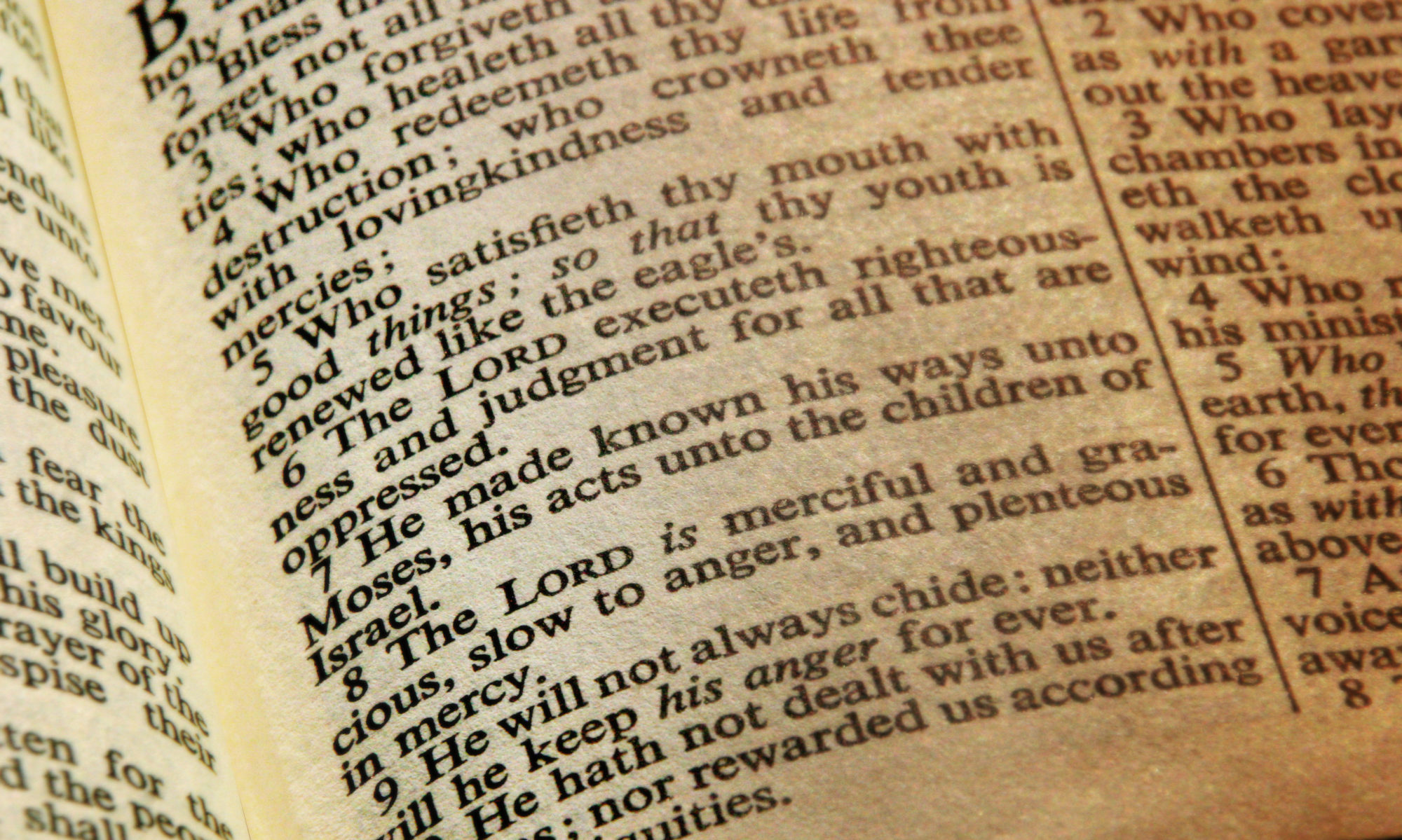
And finally, his parables fulfilled prophecy. Psalm 78:2 promises “I will open my mouth with a parable; I will utter hidden things, things from of old.”
So what are we prepared to sell to gain the kingdom? Where do we see the seeds planted and the dough rising? Where do we need patience as the kingdom grows from tiny actions and powerless people?
We live in a “go big or go home” culture, but the biggest things start very small, hidden from sight. Jesus calls us to a kingdom built on insignificant and hidden, a kingdom that nonetheless rises to the heights of eternity.
— Sermon Notes, Dave Sim, Renew Church, Lynnwood WA, August 9, 2026
When we are excited about something – a new movie, new restaurant, a new book – we tell other people about our excitement and invite other people to join us. We want whatever we are experiencing that is good and excellent or awesome to be shared with others. When we love something, we want others to love that thing. That is at the core of what it means to witness or evangelize.
In this passage, Jesus is calling some of the first disciples, and doing so in a way that seems chaotic from an outside perspective. Why is Jesus extending this invitation to these people? Why are they accepting?
This story comes at the beginning of John, and has analogous chapters in the other gospels with slightly different telling. This part comes after the theological opening to the gospel of John , the “Word was God,” etc. Then it starts the narrative with John the Baptist who is pointing people to the coming of the messiah. He is putting his ego aside and pointing his own disciples directly to Jesus.
In First Century Judaism, pupils would typically seek out their rabbis, rather than the other way around. It’s like seminary students seeking out specific professors – and the rabbis would be selective, only taking the elite.
So Jesus is being counter-cultural in two ways – he is reaching out directly, and being far less selective, in the world’s eyes, taking blue collar fishermen as well as the more experienced disciples coming over from John.
This story shows how Jesus operates relationally, in an intensely personal manner. He brings in his disciples through a chain of witness. The “come and see” leads directly to a “follow me.” Jesus could have done things differently, using his power to bring thousands to him all at once. But instead, he works one person at a time. John points a pair of people to him, and then Andrew brings in his brother. Then Jesus directly approaches Philip who brings in Nathanael – going personal relationship by personal relationship.
This relational interaction is to some degree in tension with the crescendo of titles we get in the passage. John calls him the Lamb of God; Andrew calls him Rabbi and then Messiah. Nathanael calls him the Son of God and King of Israel. Jesus calls himself the Son of Man, a callback to the prophecies of Daniel, and evokes the image of Jacob’s Ladder in Genesis 28, setting up Jesus as that ultimate bridge between earth and Heaven.
We come together because we believe this, because we are looking ahead to a future that is greater than today, and to the work that God does in our lives today. We experience the good work of Jesus, and we can call others to come and see what He has done in our lives.
— Sermon Notes, Dave Sim, Renew Church, Lynnwood WA, August 2, 2026
When the Spirit is at work, the unheard are heard, the gifts previously overlooked become front and center and the
Sometimes church can feel like the (movie version) of the Council of Elrond, with arguing, disputing, power struggles, ambition and a little bit of racism. But Frodo stepping forward quieted the debate, because him taking the ring is clearly counter to his own desires – he is trustworthy because his desires are not for power. He is able to step in with authority, ironically because he does not seek that authority.
This is largely what Paul is trying to convey to the church in Corinth, populated by many former pagans who came from a chaotic, ecstatic tradition, who had a tendency to bring that style into their new community.
But Paul’s point is that the work of the Holy Spirit is the real thing, the genuine article, and thus there needs to be a level of trust and harmony in our interactions. The way evil often works is to use the chaos and activity of community to fracture relationships, driving a wedge between people who should be working shoulder to shoulder. Things fall apart.
But the work of the Spirit is to bring things together, bringing the diversity of the church together in the unity of God. We see this in Pentecost, as many languages come together in a unity of faith. The Spirit works to glorify Christ by bringing together people who should never, by worldly standards, work together in fellowship.
We see this in diversity of people and in diversity of gifts – given, as Paul writes, for the common good. There are different kinds of gifts, but all from the same Spirit, and all for the same ultimate purpose.
Paul is contrasting this to paganism, where there are many spirits, but each individual centers their own experience to the exclusion of all others. The church, by contrast, needs humble, trustworthy authority to ensure all people and all their gifts are honored.
Each of us only has a limited perspective – we are a single puzzle piece, maybe a part of the a leaf – all we know is the color green. But the Spirit can see the whole picture, and sees the brilliant blue of the sky and the deep brown of the trunk, and the different shades of green as the light hits many different leaves. When the Spirit is at work, we get a glimpse of that full picture.
And so when we make rules and roles that are based only in our own experience, based only on our own desires, we miss the entire picture.
No one person, no one group, no one church has all the answers. No one church can reach all people the way they need to be reached, can love each person the way they need to be loved. We, as a church and as individuals, are a part of a great mosaic, with a role in our community to do God’s work alongside many others.
A healthy, Spirit-led church is one where a wide diversity of gifts are given their place, even at the expense of efficiency. These moments of pause where we listen to those not often heard are opportunities for the Spirit to speak into our community.
And so we should seek out our own gifts and the gifts of others, and work to see them all used for the good of others and the glory of God.
— Sermon Notes, Dave Sim, Renew Church, Lynnwood WA, July 19, 2026
We see in this story that even in what sounds like a utopian community, a fellowship of love in the midst of persecution, humans are still humans, and conflict still arises. Specifically, the Greek Christians, and the widows in particular, feel like they are getting short-changed in comparison to the Hebraic Christians. All of these are still Jewish, but there is a sharp distinction between those who grew up as part of the diaspora, spread all across the Greek-speaking world and living largely within that culture, and those who grew up and come from the culture of the land of Israel, with more traditional Jewish culture, Semitic languages (Hebrew & Aramaic), as well as more of a resistance and resentment of the outside world which has so often oppressed the people of God.
In a world that also has a mix of cultures and complex, overlapping layers of power and oppression, this story gives us a lot to think about and apply in our own lives and communities.
This story is part of Acts, often called the fifth gospel, or as one half of “Luke-Acts” since both were written by Luke. You can consider Acts “the gospel of the Holy Spirit” like Luke and the others are “the Gospel of Jesus Christ.” It is tempting to make the story about the humans in the story, the apostles and pastors and disciples, but in reality the main character of the book is the Holy Spirit – it is the Holy Spirit who moves through the church to grow its numbers and to spread the knowledge of God across the world.
All of this is in answer to Jesus’ promise before He ascends:
You will receive power when the Holy Spirit comes on you; and you will be my witnesses in Jerusalem, and in all Judea and Samaria, and to the ends of the earth
Acts 1:8
This power is still promised to us today, it is not only something that happened in the past, but is live and active in our lives today. Likewise, so is the call to be His witnesses to the ends of the earth. Like a pebble in a pond, the truth ripples outward. That is a call that goes all the way back to the beginning, when God called on humanity to “be fruitful and multiply” – now revolutionized from a basic biological impulse to a multiplication of life as it was meant to be lived, the God-centered life made possible by the sacrifice of Jesus and the work of the Holy Spirit.
But what we see here is that the place where the pebble drops is also where the messiness of humanity and life in this fallen world starts to show their impact. “The center cannot hold.” It is hard for the center to let the ripples go, to let control go as the power spreads from those at the start to those in the fringes, to those at the “ends of the earth.”
When we have a scarcity mentality, we fear that as that power expands it means there is less is it for us. But the Holy Spirit is eternal and infinite – the same beneath the ocean as in the desert, the same in the center as the farthest reaches. The Holy Spirit is the very definition of abundance, and speaks into each person’s life, each church’s life, each people’s life in its own way. When the church becomes ethnocentric, that’s where the danger comes in – when we conflate our people group, our nation, our culture, our government with the church, things break. When the people of God seek a king, despite the warnings of prophets, bad things happen.
Sometimes the work of the Holy Spirit seems mystical or fantastical. But in reality, the work of the Spirit is practical and real. In this story, we see that the result of being Spirit-filled is that these leaders are all gifted administrators.
Oftentimes you’ll hear this passage preached as being about delegation. Sometimes pastors will even use this passage to boost their own profile or to get themselves out of practical ministry and service. There’s some truth to that, but it misses the broader point that the goal of the church is to love all people.
In this case, we see that the Hebraic Jews have a blind spot, and they address that by empowering Hellenistic Jews to facilitate and ensure the proper care of that part of the church.
Widows are part of the “core four” of the vulnerable in scripture – widows, orphans, immigrants and the poor. The scriptures are replete with commands to care for each of these groups. And so the work of the Holy Spirit here is intensely practical and administrative, finding ways to better serve and love the people we are instructed to care for.
Perhaps the most notable part of this story is what happened immediately afterwards to Stephen, the first name on the list of deacons there to serve so that the Apostles could devote their time to preaching. Stephen becomes the first martyr for preaching! Apparently he could manage both preaching and waiting on tables! Then Philip, also in that list, is led by the Spirit to preach to the Ethiopian eunuch, accidentally starting the Coptic Church!
These men followed the command to “seek first the Kingdom of God,” and much else was added to them. That same promise, that same power is offered to us, and so let us also listen for the complaints that rise up, the people being overlooked, the needs going unmet. There is abundance available to us!
-Sermon Notes, Dave Sim, Renew Church, Lynnwood WA, July 12, 2026
This morning we gather at the tomb not as passive observers but active participants along with the disciples John, Peter and Mary. We are invited to linger in the story, to engage with the sorrow, the uncertainty and the joy.
This passage opens with a race between Peter and John, aka “The Disciple Jesus Loved” (which John wants you to be sure to know that he won). He does, though, wait for Peter to go in in deference to his elder. The two responses here illustrate different faithful responses to the risen Christ. John sees and believes, while Peter enters into the tomb to investigate and examine the evidence. John represents the eager willingness to believe, while Peter shows judicious, even forensic examination. They believed, but the scripture tells us that they did not yet fully understand before they left the scene.
The story of Peter and John, though, is bookended by the experience of Mary Magdalene, who has been a consistent presence through the Crucifixion and into all the stories of the empty tomb. She was there before the disciples had their race, and she stayed after they left. She sits in her sorrow and loss, remaining at the scene to grapple with her grief and uncertainty. Mary’s story goes beyond belief, whether eager and willing or careful and forensic. She does not merely believe, but she loves and lives in relationship with Jesus, and so feels the loss deeply. And it is in the midst of this lament that Jesus enters in.
And when he does, He engages on a heart level, speaking her name, Mariam, in Aramaic rather than the Greek that is used elsewhere in the story, in her “heart language.” And Mary responds in kind, crying out “Rabboni,” again in Aramaic and depicting a close relationship with a teacher and mentor.
And he tells her that everything has changed – in Luke, he asks, “why do you search for the living among the dead?” Don’t cling to the old life, but embrace the new. Don’t live in Friday, because Sunday has come
Easter is not an invitation to run faster, but to linger in our uncertainty and sorrow, to encounter the truth and love of a relationship with our glorious, risen savior. It is a chance to understand what dead things we are clinging to that fracture our relationships. It is an invitation not to examine faith but to embrace life.
And it is an invitation to tell others, just as Jesus instructs Mary to do. She takes the title of the first apostle, not because she was fast, not because she was authoritative, but because she missed Jesus and sat before the tomb and cried. Let us take her as our example of resurrection faith.
— Sermon Notes, Dave Sim, Renew Church, Lynnwood WA, April 5, 2026
This story is a tale of paradigms – opposing and shifting understandings of how the world works.
It starts out immediately with the disciples assuming a paradigm and begging that question. “Who sinned?” The Old Testament tells us God punishes the wicked, which had turned into the idea that any negative situation was itself a punishment, maybe even for sins committed before birth!
But Jesus rejects that paradigm – no one sinned to make this man blind. Some English translations imply that God instead made the man blind in order to display the works of God, but the Greek does not necessarily suggest that level of cause and effect. The works of God, rather, are what Jesus is there to do regardless. Specifically, the bringing of light into darkness, both in the form of this man, and also in the broader spiritual sense.
Thus ends part one, but the story continues. The people around the blind man are confused, unclear even if it was the same person. In an effort to sort things out, they bring the man to the Pharisees, who have their own paradigm. It’s the Sabbath, and work, including healing, is forbidden on the Sabbath – therefore this healing is sinful and cannot be a miracle from God, which means it probably didn’t happen at all.
So the Pharisees push back and make the man tell his story again. He does, and every time he tells the story, his understanding of Jesus increases. He goes from being just a guy with some mud to being a prophet, which the Pharisees do not like.
So they bring in his parents, presumably with the goal of showing that he was never blind. But his parents are terrified of being ostracized from the community and so stay clammed up, pointing them back to their son.
So their son tells his story yet again, and zeros on on both what he knows and what he does not – “I was blind, but now I see.” This does not fit into the increasingly frustrated Pharisees paradigm, and so – after a bit of mutual rudeness – they toss him out.
Jesus then seeks him out, and the man’s understanding increases once again, accepting Jesus as Messiah and Lord. Jesus draws the line between the man’s former physical blindness and spiritual blindness, and the healing Jesus brought to both, and offers to the rest of the world. But on the flip side, he also points out that he will do the reverse, and those who think they see properly will be unable to see the work of God.
The Pharisees, correctly, guess he’s talking about them, and object. In their paradigm, they are chosen by God, so how can they possiblybe blind? But Jesus points out that their very paradigm condemns them, because their behavior does not match their teaching.
That’s where this story wraps up. What can we learn from it? We here have (or seek to have) a Christian paradigm, centered on the work of Christ. And like the formerly blind man, we will run into people who do not share our paradigm and who reject it outright. Like the blind man, we should stick to our story. This is uncomfortable in our post-postmodern environment, which dislikes the idea that spiritual things can be objectively true. But like the blind man, we should center our story on what Jesus has done for us. We know from our own various experiences that Jesus is loving and compassionate. This starts with His sacrifice on the cross and extends into our daily lives following him.
Jesus’ final words to his disciples on earth echo this – go and make disciples. Tell your story, just as the blind man did.
When do this, we can count on Jesus to encourage us and comfort us as we do this, and to use even the small things that we do in service of the Great Commission to further the work He is doing in people’s hearts over time.
— Sermon Notes, Robin Swearinga, Renew Church, Lynnwood WA, March 15, 2026
This story comes in the early part of Jesus’ ministry as chronicled by John. He has turned water into wine, called disciples, cleared the temple courts and just started building a name for himself. That name was enough to connect him with Nicodemus, a leader among the Pharisees, who primarily interacted as Jesus’ antagonists.
Unlike most, though, Nicodemus came at night – this may be partly because he didn’t want his interest getting around, but it also creates a strong contrast with the other Pharisees who came during the day with the goal to draw a crowd and debunk or humiliate Jesus.
So you have this very learned, powerful person submitting himself to learn from this itinerant, newly arrived, lower class rabbi. But Nicodemus didn’t just take what he was told, and pushes back on the notion of rebirth. Possibly drawing from Jewish arguments against Grecian cults of rebirth, he tries to dismantle this metaphor of being “born again” – but Jesus pushes forward, because it’s not just a metaphor but a spiritual reality centered on his very person.
Nicodemus is a spiritual leader of Israel, but he is not equipped to grapple with spiritual realities – he’s trained on rules and sub-rules and interpretations of rules, but this is heaven breaking in on the earth, this man in front of him a rent in the fabric of reality, ushering in a new way of relating to the creator, one that extends to the entire world, not just the people of Israel.
And this is not just a far off moment, “somewhere in outer space” but rather a reality we have access to right now. The salvation that Jesus brings is a real, immediate thing, and he offers it to us freely. “For God did not send his Son into the world to condemn the world, but to save the world through him.”
This salvation is there for us to ask for, and Jesus longs to hear you ask for it. The Father sent him to save us and open us to the work of the Holy Spirit. The fullness of the Trinity welcomes us into that eternal relationship. We are ourselves invited to serve as that rent in reality, points in space and time where heaven bleeds through in the form of love and truth and grace.
We never get a clear answer on what happens to Nicodemus in the wake of this conversation, but later in John we see Nicodemus defending Jesus from his fellow Pharisees, and then after the Crucifixion bringing spices to honor and embalm this man who one night opened the mysteries of heaven to him, who spoke to him of the undefeatable love of God.
Let us live out that love ourselves, accepting the love and grace Christ offers, and then living out that love and grace we have received.
— Sermon Notes, Nancy de Jong, Renew Church, Lynnwood WA, March 1, 2026
Image: Nicodemus Visiting Jesus, 1899, Henry Ossawa Tanner