Do Good – 1 Peter 3:8-16

We have been exploring what it means to live Christ-honoring lives outside the walls of the church building. It means internal growth and maturity, but it also means loving others. All church mission statements boil down to “love God, love others”.

And not just others who look like us, think like us, vote like us, live like us, we’re called to love all our neighbors. This is hard! Christ makes sure we know it’s hard – he instructs us, “be perfect as your heavenly father is perfect, ” but he also offers grace to us when we fall.

As Christians, we live in a tension as “resident aliens.” We are citizens of heaven, set apart by God – and yet we are in the world and called to minister to it and love those around us. This is a tension that feeds back on itself, though, because it is that very set-apart-ness, that love God has for us that spills out into the world through us.

1 Samuel 22 tells the story of David in the cave of Adullam – he has been rejected by Saul and is hiding out in a cave with his loyal followers. He is a stranger in his own the land, a fugitive and refugee within the kingdom he was destined to rule. But his response was not what we move expect – he gathered “all those who were in distress or in debt or discontented.”

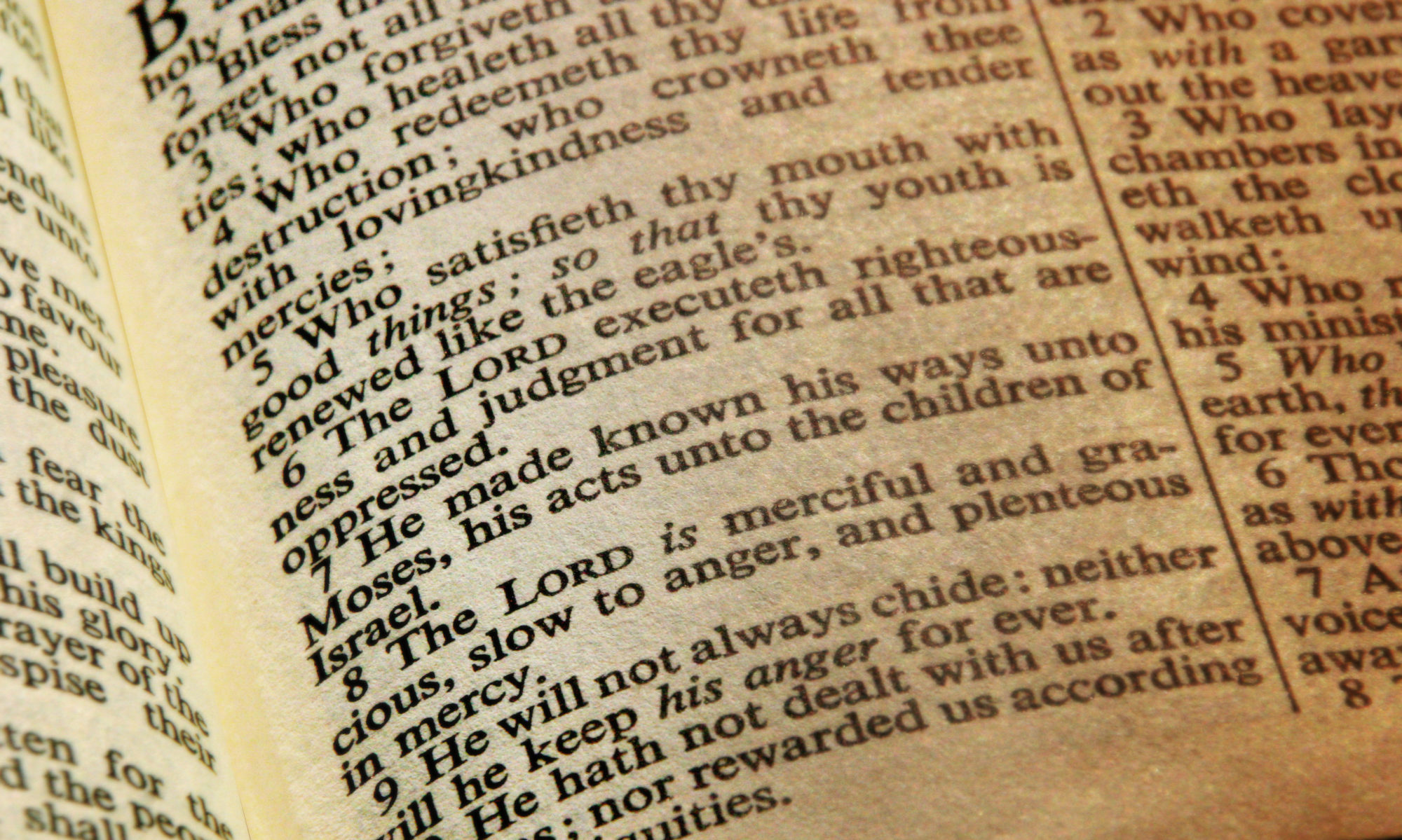
Peter references this experience, quoting from Psalm 34, which David likely wrote in that cave after having escaped from the Philistines as he sought to escape Paul.

Peter’s whole letter is an instruction to the people of God on how to live within an empire. He sets up Christians to live quietly subversive lives that worked within the pagan religious and sociopolitical framework of the Roman empire. He gives five words of instruction:

  • συνφρονέω (synphroneō) – “Be like-minded”
  • συμπαθής (sumpathes) – “Be sympathetic”
  • άγαπάω (agapao) – Love one another
  • σπλαγχνίζομαι (splagchnizomal) – “Be compassionate”
  • ταπεινός (tapeinos) – “Be humble”

All of this points us to the life of Christ, in all its complexity, and we are to seek to live like him.

Then Peter gets to the verse probably most often quoted from this passage: “Always be prepared to give an answer to everyone who asks you to give the reason for the hope that you have.” This is often interpreted as a call for apologetics and an intellectual case for our hope. But if you look at the passage as a whole, it points us back to the words of unity, love, compassion and humility.

This passage is not about handling hostile questions from angry atheists, but about drawing people into wonder what is going on with us. It’s not about answers to the problem of evil or the historicity of scripture, but answers to questions about why we love so well, why we give so well, why we are compassionate to those others hate.

Are you living a life peculiar enough to make others ask questions about the hope that is in you?

The hardest thing Peter instructs us to do is be humble – in this age of social media it’s easy to instantly share your opinion, but it’s difficult to do that in humility. Can we live in that humility and unity? Can we walk in the tension of living in the world but not of it, as ministers of reconciliation? Can we remember where our hope truly lies?

We have an election on Tuesday and the outcome and aftermath are uncertain. What is certain is that God is still sovereign, that He still loves us and has a plan for His church. Let us rest in that knowledge and let it propel us to lives that point others to the reason for our hope.

— Sermon Notes, Dave Sim, Renew Church, Lynnwood WA, November 3, 2024

Images created with Midjourney.

The Foolishness of God

Go read "The Greater Trumps" by Charles Williams

​In theology, a distinction is made between two types of knowledge. General revelation is available to all – empirical knowledge obtained through the senses within the natural world. Special revelation is that knowledge that comes from beyond the natural world; that is, supernatural.

Paul here discusses the wisdom of the world – secular knowledge and wisdom, everything from engineering to psychology to biology to sociology to history. These are, on the whole, good things, but we must remember to keep them in their proper place. The prophet Jeremiah reminds us that it was the wisdom of God that created the world, while human wisdom cannot create anything, but only rearrange what God has already made. We must remember that secular wisdom is very limited.

There is one area in particular where secular wisdom is not just limited but completely inadequate. That is the realm of the spiritual, the metaphysical or the moral.

Paul has to talk about this because the Corinthians (much like us here in Seattle) were enamored of human wisdom. When secular wisdom attempts to move into the lane of spirituality, we get significant problems, and this was happening here, in a culture of debate and status. In this world of wise people, Christians were being told that their stories were primitive and childish. When you hear this from wise, intelligent, powerful, influential people, it can be damaging.

That’s where Paul comes in. You would think that he would jump in to this debate to provide powerful intellectual weapons with which to battle the intellectual culture. Instead, though, he refuses to fight on their terms.

He cites Isaiah, who was speaking to the people of Jerusalem as Sennacharib approached the walls with 200,000 men.  Isaiah counseled King Hezekiah that, despite all the empirical evidence that they should surrender, they should stand strong. The angel of the Lord then wiped out the beseiging army and Sennacharib was forced home with his tail between his legs.

We cannot know God purely through human wisdom. The closest we can get is a general sense that there is a god of some sort. And then, even when God Himself comes down to earth, He does so in a way that is scandalous to the Jews – hanging on a tree, which the Law says is cursed – and simple, rudimentary foolishness to the Greeks – Jesus loves me, thus I know. An itinerant preacher executed before the age of 35. A king with no kingdom.

Why would God make this so difficult for the faithful and the wise to accept? Why is the cross so counterintuitive to human thinking? Paul here writes that it is so that we know that our salvation is not from ourselves. It is so that God’s power is revealed by bringing people out of their own worldly perspective and into His perspective, through no worthiness of our own.

As a whole, the Christian message is most readily accepted by the poor, the outcast and the simple. In Corinth, the notions of nobility and legacy were of utmost importance – but having those, in fact, makes it less likely that you would accept the truth. Paul goes on to out-boast the boasters. God takes on the persona of the boasting Greco-Roman patron, trashing their wisdom and bragging on His methods.

What’s more, God goes even further – not only is the message itself foolishness, the method of the message was foolish as well. Paul reminds the Corinthians that when he first came to them, he did not use the classical rhetorical methods of the day. Rhetoric focuses on the capabilities of the speaker. It manipulates people emotionally and says what people want to hear. It holds out the hope of prosperity and virtue in order to lead people into your side. It manipulates facts in order to sway opinion. We see this today – in politics, in the “prosperity gospel” and elsewhere.

Paul sets up another school of persuasion against that of rhetoric – preaching, serving as a herald of the King. Preaching is different than teaching and rhetoric. Preaching elevates Christ, not the preacher. Preaching lays out truth rather than attempting to manipulate or even persuade – preaching is not even apologetics. Paul is not against rhetoric, apologetics, logic or persuasion (see: the entire book of Romans). But there is a higher call, one that inspires “fear, trembling and weakness”, because there is no one who is truly adequate to the task of passing on the eternal truth of God.

So, God created a method that overcomes secular wisdom and expectations. Secular wisdom is a valuable thing, but it is, at its best, only a discovery of what God has already put in place. We can have faith that, ultimately the wisdom of God will be vindicated.

We should engage with logic, reason, knowledge, writing and rhetoric. We are not called to ignorance. However, we are called to follow the foolishness of God ahead of the wisdom of the world.

We also understand from this passage the importance of preaching as a key method that God uses to convey His truth to His people and to communicate the Gospel. Apologetics is a vital supporting aspect of Christianity, but people are not brought to the truth of Christ through logic and persuasion – they are brought by the work of the Holy Spirit.

– Sermon Notes, Brent Rood, Seed Church, Lynnwood, WA

Something went wrong with the bible. Please make sure that you are requesting a valid passage! If this problem presits please contact joshuawiecorek@outlook.com