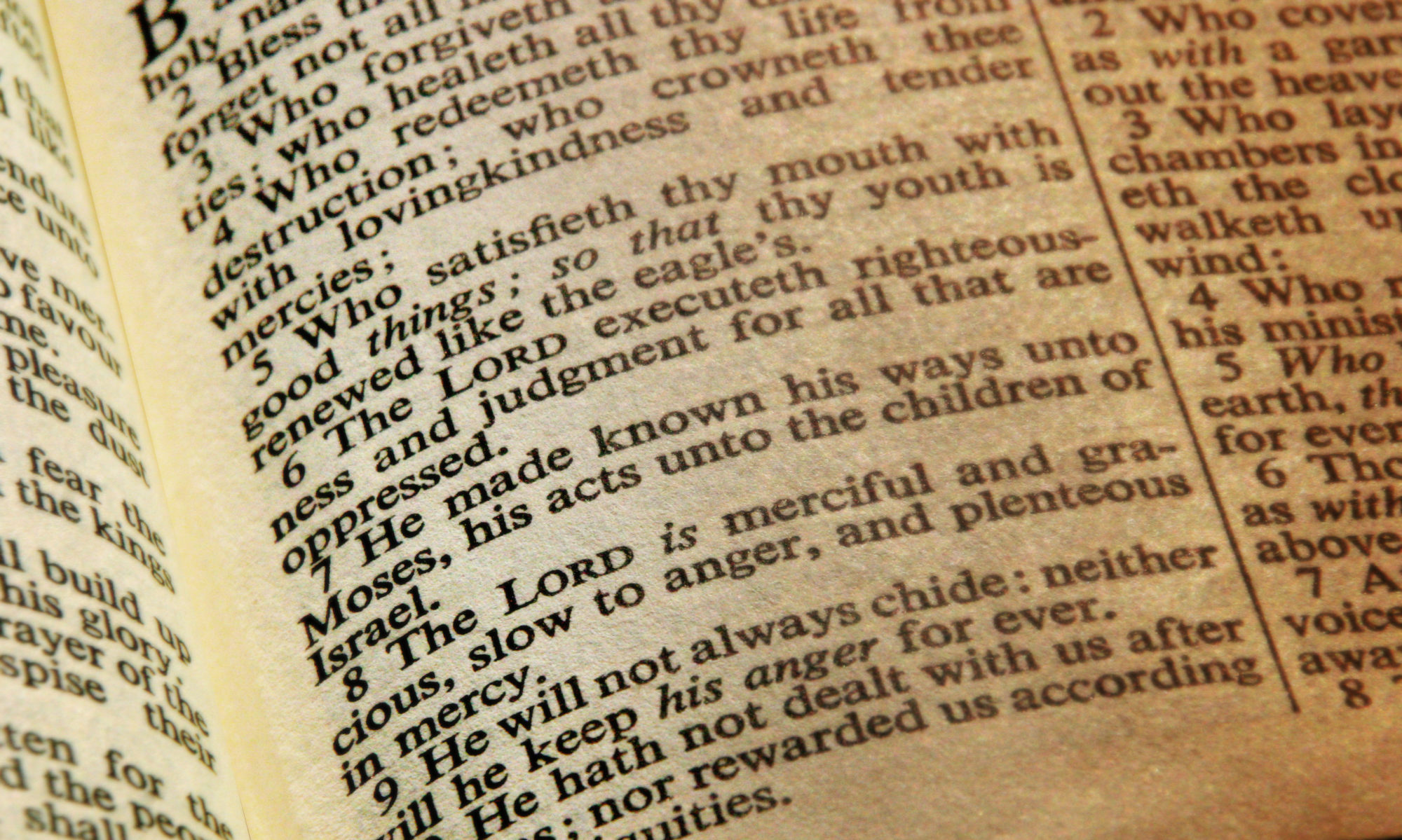
Beginnings – Ephesians 1:1-3

Why start with Ephesians? First, it’s a familiar book, with key verses about being saved through faith, about the armor of God and other topics. Second, it’s a book that focuses closely on salvation and on Christ. Third, it focuses on relationships, building a diverse group of people into a unified fellowship – very relevant. So is the focus on spiritual warfare, and the practical

The theme verse for this series is Ephesians 4:23 — “be renewed in the spirit of your minds.” For the believer, the word of God reframes our perspective on life. We need to see things differently in the light of the gospel.

Paul starts by calling himself an Apostle, a messenger of God. The message that he brings is greater than him, than his ability to understand or sustain it.

So that’s who’s writing. Who is he writing to? Possibly just the Ephesians, though that reference is not in all the manuscripts – out could be a circular letter that went to a large number of churches in Asia Minor. Ephesus was the hub of Christianity in that region. The message of John the Baptist reached the area early, and Paul met a group of his disciples there. Lots of other things happen in Ephesus in the book of Acts, and in fact that book is one of the main sources of any information about the city in ancient literature. The Ephesians also receive a letter from Christ himself in Revelation, where they are praised for their faithfulness, but called back to the live they had at first, but had lost.

So, Paul, to the Ephesians. As a greeting, he conveys grace and peace through Jesus Christ.

Grace is the unmerited favor of God, a gift to the unworthy, and we only truly understand it when we understand the truth of our unworthiness. Peace is Shalom, not just a lack of violence, but wholeness and completeness – creation as it was intended to be.

This is a common greeting across Paul’s epistles, but it is most suitable here, where he packs the most concentrated discussion of grace in all the Bible.

Then he goes on to discuss the spiritual blessings God gives us. Calvin writes about Ephesians,

Paul tells us that the benefits which are brought us by our Lord Jesus Christ and of which we are made partakers by means of his gospel are so excellent that we must surely be extremely unthankful if we scurry to and fro like people who are never at rest or contented.

These blessings have been interpreted many different ways – often badly, as wealth or prosperity. In reality the blessings are fast better, far more than mere material stuff or even health.

The blessings of Christ are far more, and they are secure. Calvin goes on to say,

And then he shows us also what we have in Christ in order that we should so cleave to him as not to presume to seek help anywhere else, but assure ourselves that he has procured everything for us

We can struggle with the security of salvation, especially if we focus too much on ourselves. But it isn’t about us. We aren’t enough, and we have never been enough. But Christ is enough and the security He offers should give us the utmost confidence.

Are you in Christ today? If so, you are blessed beyond anything you can imagine. If not, listen to the writer of Hebrews, quoting Psalms: today, if you hear His voice, do not harden your hearts.

– Sermon Notes, Bart Hodgson, Seed Church, Lynnwood WA, July 12, 2020

Glory in the Church

There is a saying: “two men looked out of prison bars; one saw the mud, the other the stars.” The scriptures are very honest about the mud and muck of life, but it also calls us to look beyond that. This passage in Ephesians is a clear call to raise our gaze and look to the hope of God.

The church in Ephesus was a small group surrounded by a wealthy civilization with well-articulated philosophies and religions. And yet this shall group went on to conquer the Roman empire – much as was promised in this passage. 

The book of Ephesians was a circular letter to Asia Minor that may not have even been meant for that church in particular, though it was certainly sent there. In the book he addresses the division between Jew and Gentile, and how that division was bridged by Christ, and how corporately we all together are the Temple of God, with Christ as the cornerstone.

The Ephesians certainly understood the concept of a temple, being the home of one of the 7 Wonders of the Ancient World, the Temple of Artemis, where Paul got himself into some trouble with some silversmiths.

In contrast, though, the Christian temple is not a breathtaking stone building, but rather a unity of Jew and gentile, man and woman, rich and poor, slave and free, weak and strong.

Because of this, Paul calls on us not to lose heart. We have the very power of God within acs behind us, according to the riches of the glory of the Father, strengthened by the power by the Spirit so that Christ may live in our hearts. The entire Trinity is at work here.

This is the only passage in the Bible that directly describes Jesus living in our hearts, but the concept is driven throughout – in Galatians, “it is no longer I who live, but Christ in me.”

The Greek word for “dwell” here means to stay in the place that is your home – Christ is not a guest at your heart’s hotel, but rather it is to be His home. All the rooms and locked closets are his, all the TVs and computers and all. Christ’s lordship touches all aspects of life, which is all to be rooted and founded in love. 

That love is what brought their church together. It was not the personality of the pastor or the technology or the quality of the band. Rather, we come together as a church because salvation is a group project. We are saved individually, but we only learn to love when we are in relationship with one another. We need each other, and we need each other most acutely where we want it the least.

Many years later, Jesus himself wrote a letter to the Ephesians. Much of it was encouraging, but Christ called them out for having abandoned the love that first brought them together.

The purpose of all of this, per verse 19, is that we are filled with the fullness of God. The question then becomes, how big is your God? Many of us struggle with an image of God that is too small, and many then reject His because He didn’t behave like the small version of God we have in our minds.

Paul’s vision of God here, is able to do far more than we can ask, more than we can think or even imagine – again, according to the power within us. And to Him belongs the glory in the church.

The glory in the church looks like perseverance, especially for us as we work through transition.

What can we take from this prayer? It can guide our own prayers. We should pray for a Christ-centered life for ourselves dvd others. We should pray for a love-filled church, and pray for a God-sized faith. And as Paul has just reminded us, that size is pretty big.

– Sermon Notes, Mahlon Friesen, Seed Church, Lynnwood, WA, February 17, 2019

Ephesians 2:14-21

Something went wrong with the bible. Please make sure that you are requesting a valid passage! If this problem presits please contact joshuawiecorek@outlook.com

Parents and Children – Ephesians 6:1-4

The family and how it operates is very important to God. It was created and ordained by God to spread Him image across the earth. This passage was written in the context of the church, to Christian parents seeking to follow God, and to their children. There are commands to both parents and children, and the two together will create a functional family unit where children can grow and develop until adulthood.

These are very general principles that will play out differently in the specifics across the vast diversity of individual and families.

“Children” here means essentially “young dependent,” whether a small child or an older teen or anything in between. There are two instructions: obey and honor.

Parents are the law, and children are to obey them like they would obey the law. Children should understand that their parents were once children, and they all resented the authority and planned to do things differently. In the end, though, parents discover that rules are necessary, and the response of children must be to obey those rules.

Children are also to honor their parents. Obedience is the behavior, honor is the attitude and emotional response that comes with it. Honoring parents means understanding that they are not peers, but representatives of God.

The instruction to honor parents comes directly from the Ten Commandments. The commandments themselves are a breakdown of the greatest commandments – “love the Lord your God with all your heart, soul and strength” and “love your neighbor as yourself.” The first five commandments are about loving God, the second five are about loving others. Honoring your father and mother comes in the first set – honoring your parents is honoring God. It also serves as a transition from one set to the other.

The commandment comes with a promise of going well and long life. In the immediate context of the commandments, there is the actual potential of capital punishment for rebellious children, because dishonoring parents is dishonoring God. More broadly, children who obey and honor their parents do live longer, better, happier lives. They are less likely to get into drugs, crime, abusive relationships and much, much more.

This is ultimately a very practical promise, echoed across Proverbs as well. Listening to others, particularly those in authority, is wise. Doing otherwise is foolish and makes a bad end far more likely.

Paul then moves onto the parents, with instructions not to exasperate their children. Kids do not need reasons to rebel, so we are not to give them additional impetus to do so.

This can come in the form of excessive discipline or smothering. Treating all offenses equally, or failing to keep pace in discipline as children age. Constant criticism is also a temptation for all parents.

Another way to exasperate children, though, is by being overly permissive and failing to provide structure. Overindulgence will train children to expect the world to serve them. Other exasperating behavior includes neglect, withholding affection, additional manipulation, threats without discipline and more. “Unhappy families are all different.”

So how do we avoid all these pitfalls? Bringing them up in the training and instruction of the Lord. Our presence itself is a key piece of this, spending quality time together.

The current generation of parents is better at this than previous. Where we tend to have trouble is the instruction side, teaching them the important, practical things that they will need in order to live, the boundaries they need to abide by in order to survive and succeed. The third component is discipline.

Presence, instruction and discipline all work together to create successful parenting. Instruction ensures that they know the rules and so are prepared for discipline when it comes, if it is consistent. Discipline is not always imposing punishment, but can also be letting natural consequences play out, letting children take risks.

When we teach children to ride bikes, we are with them (presence), we instruct them as to the process, send them off, then we let them ride, fall down, and get them back up (discipline). If we don’t have all three of these, the process will not work.

The relationship of patents and children is directly related to the children’s ultimate relationship with God. We should follow the instruction of God ourselves as we pass that instruction along, depending on the grace of Christ when we fail.

– Sermon Notes, Brent Rood, Seed Church, Lynnwood, WA

Ephesians 6:1-4

Something went wrong with the bible. Please make sure that you are requesting a valid passage! If this problem presits please contact joshuawiecorek@outlook.com