Unity – Psalm 133

This is a short but good psalm describing the blessings of unity. It’s ultimately two verses sandwiching two metaphors.

The overall message is that it is good for people to live in unity, and God will bless that unity even into eternity.

The first metaphor is that of Aaron and the Aaronic priests being consecrated with oil, a symbol of the relationship that God has created with His people.

The second metaphor is that of the dew on Mount Hermon, the source of the waters that give life to the whole realm of Israel – the same dew falls on God’s holy mountain in Jerusalem, where the temple is representing the true life given from God, ultimately by Christ.

Christ Himself also calls for unity, praying for it for his disciples in the Garden of Gethsemane, in John 17: “Holy Father, protect them by the power of your name, the name you gave me, so that they may be one as we are one.”

Paul writes to the Ephesians about unity as well, giving instructions on how to promote unity – humility, gentleness, patience, bearing with one another in love.

What is this unity? It’s not the unity of affinity, around hobbies or interests. It’s not even the unity of theology, where some items are interesting but unimportant, some things are important but not essential. There are unifying doctrines that we do all need to agree on, and those are points of unity – the trinity, the sacrifice of Christ and the truth of the Gospel.

When we disagree with each other, we should take the commands Paul gives in Ephesians around gentleness and love. We can also look to what he writes in Romans 14 specifically about opinions. Do not quarrel, and recognize that those who are doing things differently than you would prefer are doing so because they see that as the best way to please God. We aren’t to stand in judgement on them, but rather to trust God to correct.

If we don’t do this, we can easily slide into the mistrust of our brothers’ and sisters’ motives and even relationship with God. Instead, we need to interact with each other in love – as Paul writes in Romans 12, we are to love each other and “outdo over another in showing honor.”

Our policy in matters of opinion in the church must be rooted in love. We need help with this because we are often incapable of seeing our own perspectives in the proper light. There’s a simple test – does it build up the church, or does it tear it down?

-Sermon Notes, Bart Hodgson, Seed Church, Lynnwood WA, August 9, 2021

The Good Shepherd – Psalm 23

This is probably the most beloved of all Psalms, bringing comfort to so many in times of fear and difficulty. Henry Beecher wrote of it,

The twenty-third Psalm is the nightingale of the Psalms. It has charmed more griefs to rest than all the philosophy of the world. It has remanded to their dungeon more felon thoughts, more black doubts, more thieving sorrows, than there are sands on the sea-shore.

Henry Beecher

The first line opens the metaphor of God as shepherd and the writer, David, as a sheep. As king, David could have seen himself as a lion or an eagle, but instead he lands on the simplicity and vulnerability of a sheep, and compares the King of Creation to a blue-collar shepherd.

This metaphor sees its fulfillment in Christ, who calls himself the Good Shepherd. The catacombs where the early church met in secret are littered with images of Jesus as the good shepherd.

The picture painted here is of God as provider, echoing the promises of God to Israel as they wandered in the desert, keeping them safe often without them knowing. How often do we receive these material blessings without even realizing it? The illnesses we do not get, the car accidents we do not have.

But more than that, even in the midst of illness, injury and difficulties, God Himself is our portion, he is our sufficiency.

Aristotle provides the broad ancient view of sheep: “The sheep is said to be naturally dull and stupid. Of all quadrupeds it is the most foolish: it will saunter away to lonely places with no object in view; oftentimes in stormy weather it will stray from shelter; if it be overtaken by a snowstorm, it will stand still unless the shepherd sets it in motion; it will stay behind and perish unless the shepherd brings up the rams; it will then follow home.”

All that to say, the sheep need the shepherd. Isaiah 53:6 says “We all like sheep have gone astray.” We need to be brought to the still waters and the pasture. We see a picture of this in how David treats Mephibosheth, a son of Jonathan who had beg crippled. David, if he had been like other kings, would have had him killed. But instead, he brings him out of the town of Lo-Debar, which means “no pasture,” to eat at the table of the king.

Then verse 3 echoes what we saw in psalm 85:13 – “Righteousness will go before him and make his footsteps a way.” It’s not the God carries us, per the Footprints poem, but he makes our way forward in righteousness plain.”

Then in verse 4 the psalm shifts – from speaking about God to speaking to Him directly. It does so at the same time as another shift, from green pastures and blue waters to darkness and danger – where else do we turn when in fear?

It refers to the staff and rod used by shepherds. The staff, broadly, is a support, something to lean on. The rod can mean the same thing, but it can also mean branch or tribe. There may be a connection here between the branch and tribe six Israel with whom God made His covenant.

Then the metaphor shifts from us being sheep to us being people at his table – as Jesus says, “I have called you friends.” Our ultimate destiny is not as sheep, but as guests of the king of the universe, and we will dwell in His house forever. Spurgeon writes, “While I am here, I will be a child at home with my God. The whole world shall be his house to me; and, when I ascend into the upper chamber, I shall not change my company, nor even change the house. I shall only be in the upper story forever.”

Is Christ your shepherd? Do you hear His voice? He loves you and is calling you to join his flock and to be His friend in His house forever.

-Sermon Notes, Bart Hodgson, Seed Church, Lynnwood WA, August 1, 2021

A Prayer for Revival – Psalm 85

This Psalm is a heart cry for revival, possibly written as the remnant of Israel return from captivity. It may come earlier, but either way it is a call for revival among God’s people.

Revival has come to mean for many a planned and scheduled event focused on conversion or rededication. But in reality, it is a movement of God in the hearts of His people.

In the psalm, the word “restore” or, maybe more accurately, “turn” in verse 4, point us to the notion of revival, as does “revive” in verse 6.

It opens with a prayer for the conviction of sin, a development of awareness of our thoughts and words and actions that are in opposition to the desires of God.

Next, the Psalmist pleads for God’s salvation, ultimately for God Himself to turn us from that sin. And he does so with a fear of the Lord, a turning from all the other things that spark fear in our hearts and rather letting all that anxiety be swallowed up by the awe of God and his power, an awe that is also deeply embedded in His steadfast love.

That intersection of God’s attributes is seen clearly in verse 10, where love and faithfulness, peace and holiness meet. This intersection is exactly what drove Christ to the cross, the ultimate fulfillment of the truth the psalmist saw centuries before.

And the result of that intersection is revival, as faithfulness springs up and righteousness looks down. It is God’s goodness that brings this about, with all the blessings that our entails.

– Sermon Notes, Bart Hodgson, Seed Church, Lynnwood WA, July 25, 2021

The Righteous vs. The Wicked – Psalm 37

This is an imprecatory Psalm, seeking retribution on the wicked. This presents a quandary, because Christ calls us to love our enemies. But there are two things to consider – first, the New Testament has plenty of imprecatory pieces as well, but perhaps more importantly, there is a difference between seeking justice on the wicked and seeking our own personal retribution. We, like God, should desire all people to be saved – but we can also seek and desire evil to be punished and justice to be done.

The psalm is a contrast between the righteous and the wicked, in particular when it seems like the wicked are prospering and the righteous are not. How do we know which side is this we are on? As Christians, we know that our righteousness ultimately comes from Christ – we have been given the righteousness of Christ Himself. We seek to live out lives of righteousness to claim the name we have already been given.

This Psalm provides many imperatives to show us what that life of righteousness looks like. “Fret not,” “be not envious,” “trust in God,” “befriend faithfulness,” “delight yourself in the Lord.”

Much of this is about your thought life – where does your mind sit? Does it sit on worry and envy? Or does it dwell on the Lord and the trust that we can have in Him? Do we delight in God like a child delights in the things that bring them joy?

Rather than being overwhelmed by evil around you, or rushing out to just do something about it under your own strength, we’re called here to rest and wait. To do good, certainly (verse 3), but without anger and wrath (verse 8).

Verses 10-26 dig deeper into the contrast between what God has for the righteous versus the wicked. There’s an emphasis on what is coming, not always on what is right now. The section starts with an emphasis on the wicked but shifts to the righteous, noting that even when the righteous fall, God holds their hand like a parent holds up a child.

The next sections start again with imperatives: first, turn from evil and do good. Then, wait for the Lord and keep His way. God’s timing is not our time, but His justice is just. Finally, “mark the blameless and behold the upright.” They are the ones who have the future, even if their present seems filled with persecution.

– Sermon Notes, Bart Hodgson, Seed Church, Lynnwood WA, July 18, 2021

The Psalm of Psalms – Psalm 51

Anglican liturgist J. M. Neale calls Psalm 51 “the psalm of all psalms” ranking it as among the most vital texts in the Old Testament for understanding sin, atonement and grace.

It’s a psalm with a specific origin, coming in the wake of David’s great sin, the rape of Bathsheba and murder of her husband. Specifically, it comes after God’s first act of mercy towards David, the sending of Nathan to confront him publicly.

The psalm uses three different words or sin: hatta, pesa and avown. Hatta is the classic “missing the mark” concept. Pesa is a specific crime or offense. Avown is the perverse spirit within us, what Paul calls “the flesh.” Sin, however it is referred to, is the breaking of God’s covenant with His people. What David is banking on is that the love and mercy of God will outweigh his sin and repair that break.

That is how he opens the psalm, begging for mercy. We have all been hurt and had mercy withheld from us. We have all withheld mercy from others. But God does offer His mercy to all of us through the death and resurrection of Christ. The steadfast love and abundant mercy David called on was put into direct practice on the cross. Adam and Eve ran from a merciful God, but David relied upon Him.

David does owe a debt to others – while his and our sin is ultimately against God, there are others who need restitution. But he also sees that his sin runs even deeper than his actions, that they spring from a broken inward being that needs restoration.

He seeks a “purging with hyssop” and herb used in rituals from the original Passover to the cleansing of disease and uncleanness. He has confidence that the purifying work of God can ultimately make him pure, even whiter than the whitest thing he can imagine. Even though it comes in the wake of crushing consequences, he looks forward to the work of restoration.

Quick notes from the rest, pieces of which I missed:

  • Verse 10 is one we should memorize and repeat in our own prayers.
  • There was no real concept of the trinity in the Old Testament, so the appearance of the Holy Spirit here, fairly clearly, is remarkable.
  • Remember that God is merciful but He is not stupid.
  • The full mercy of God leads to the most abundant life.

– Sermon Notes, Bart Hodgson, Seed Church, Lynnwood WA, June 13, 2021

God Our Refuge – Psalm 16

This Psalm is a Miktam – another one of those musical phrases we don’t really know the meaning of. It could mean “engraving” in that it was written down or carved somewhere. It could mean “golden, ” meaning valuable or popular. Most likely it is some kind of notation for the musician or the singer. Like many of the first set of psalms, it is a psalm of David.

It opens with a request for deliverance, using a soft imperative tense that means a begging or beseeching. There is no specific dilemma cited like there is in many other psalms, but there are certainly many possibilities throughout David’s life – or it could be a general prayer.

He sees God as a hiding place, as a protective source of refuge from the danger around him, but then builds on that. He speaks to his own soul, calling himself to acknowledge God as Lord, and to acknowledge himself as sinful, either meaning he has no goodness without God, or that whatever good he may have is insufficient when coming before the Lord.

He then looks outward at those around him, aligning himself with those who align with God, but looking at those who do not, not with scorn but pity, because he knows their end will be tragic.

He goes on, back to God, who is his chosen portion and cup, not only sustenance but also the prime choice and something to rejoice over. The next verse basks in the goodness of what God gives him, despite the difficulty around him. The territory, the inheritance God has promised him is pleasant and beautiful.

God gives him counsel and instruction, God is always set before him, always at hand. This is what makes him glad, rejoice and dwell securely, even in the midst of persecution and danger.

Then David gets a glimpse of God’s ultimate promise of salvation even in death – this verse is cited in the New Testament as a picture, as a calling forward of the resurrection of Christ. And David closes the prayer with another glimpse, of the eternal joys awaiting us in the presence of God. No wonder there is no fear! No wonder God is his refuge in which his flesh dwells secure.

In Acts, we have the story of Pentecost and Peter’s impromptu sermon after the coming of the Holy Spirit. He speaks to his Jewish audience about David, who died, pointing forward, in this Psalm, to his descendent Jesus Christ who fulfilled all the promises that David gave glimpses of.

We, who have this fullness come to us that David only foresaw, can pray this prayer along with him when we feel oppressed and in need of refuge. May it bring us out of our inward, downward facing orientation and point us to the God who loves us.

– Sermon Notes, Bart Hodgson, Seed Church, Lynnwood WA, June 6, 2021

Blessed Is the Man – Psalm 1

There is a choice for all of mankind – who are you going to give yourself to? A choice between blessings and curses, between the kingdom of God and the kingdom of self and darkness. Psalm 1, echoed in the Beatitudes, walks through who God blesses.

It begins with a negative – what we are not to do. It paints a picture of a man sliding into temptation, from walking along, to stopping to listen, to sitting and engaging in wickedness directly. Paul uses these same terms in Ephesians to paint the opposite, the deepness of the relationship with Christ that we are offered.

The first positive attribute of this blessed man is “delight in the law of the Lord.” The instructions of God are not simply rules and regulations but God’s outstretched hand to His people, to be grasped in joy. How much moreso for us now, with the Law fulfilled in the person and work of Christ?

The blessed man is compared to a fruit tree, firmly planted (and planted by Someone else, not by itself) by an irrigation stream, specifically and strategically placed in order to bear much fruit.

In contrast, the wicked are like the leftover husks of wheat, blowing away as the farmers separate the grain from the garbage. It is a picture of God’s judgement that we see throughout the scripture.

This fruit vs. chaff dichotomy is one of several in this brief Psalm as the psalmist walks us towards the ultimate end of both the righteous and the wicked. The one knowing and known by God – the other, perishing. The psalm is a call to right living, right thinking, right speaking as we seek that relationship with God.

The term “meditate” here means to mutter or even growl. It’s like the grunt of effort as you pull up brambles, it’s like the gargling as we fill our mouths with the word of God. It’s like the savoring of the flavors of good wine or good coffee, engaging in the depth and nuance of the word. As Spurgeon says, “Not by hasty reading, but by deep meditation, we profit by the Word of God.”

The task set in front of us is not easy – the mockers, sinners and wicked are all around us – and even within us, in the form of the Old Man. All our natural inclinations are towards what is easy and selfish. It takes time and difficult effort to train ourselves away from this. The Psalmist here is begging us to engage in that training, drinking deep of the training manual we have been given.

Jesus tells us about the importance of being known by God: “Not everyone who says to me, ‘Lord, Lord,’ will enter the kingdom of heaven, but the one who does the will of my Father who is in heaven. On that day many will say to me, ‘Lord, Lord, did we not prophesy in your name, and cast out demons in your name, and do many mighty works in your name?’ And then will I declare to them, ‘I never knew you; depart from me, you workers of lawlessness.’”

Ultimately this is the most important thing there is – and through Christ’s fulfillment of the law we are given His righteousness, bringing us the blessings promised here.

But we still seek to live out what we have been given, seeking to delight and meditate on the words of God and the Word incarnate. We seek to be, in the words of Isaiah, “oaks of righteousness,” drinking deep from the well of truth and love that we have set before us.

– Sermon Notes, Bart Hodgson, Seed Church, Lynnwood WA, May 30, 2021

Don’t Limit God – Psalm 78 1:1-22

Psalm 78 is the longest of the history psalms. It is the story of the Israelites in the wilderness and a reminder that when we go through times of wilderness in our own lives, God is all we need.

This is a psalm of Asaph, reminding Israel – and therefore us, because we have been grafted in – of what God has done. It begins with instruction to listen carefully even though (or especially because) we have heard these stories before, because there are lessons to be learned. We are to trust and pass on these stories to the next generation.

Specifically, we are too teach them three things: the glorious deeds of God, his strength and his mighty wonders. Knowing the ways of God and how he cares for us is more important than knowing facts about God. 

It goes on to say the God has established a testimony through the Law, which we are to review and repeat so that the next generation will set their hearts anew on God. 

This is in contrast to earlier generations who abandoned God and did not set their hearts aright. They did not deal with the “idol factory of the heart” as Tim Keller calls it, even when God does many miracles and even makes water pour from a rock. 

Instead, they were ungrateful, complaining and murmuring, ungrateful for what they had been given. They did not trust God to care for them or even believe that God could. 

Does this stir anything in your heart where you are limiting God? Our hearts are “prone to wander” which means we have a need for self examination. We are called up prepare our hearts so that we can maintain confidence in God even in the wilderness. 

– Sermon Notes, Brad Weir, City Church International, Dallas, TX, January 20, 2019

Psalm 78:1-22

Something went wrong with the bible. Please make sure that you are requesting a valid passage! If this problem presits please contact joshuawiecorek@outlook.com
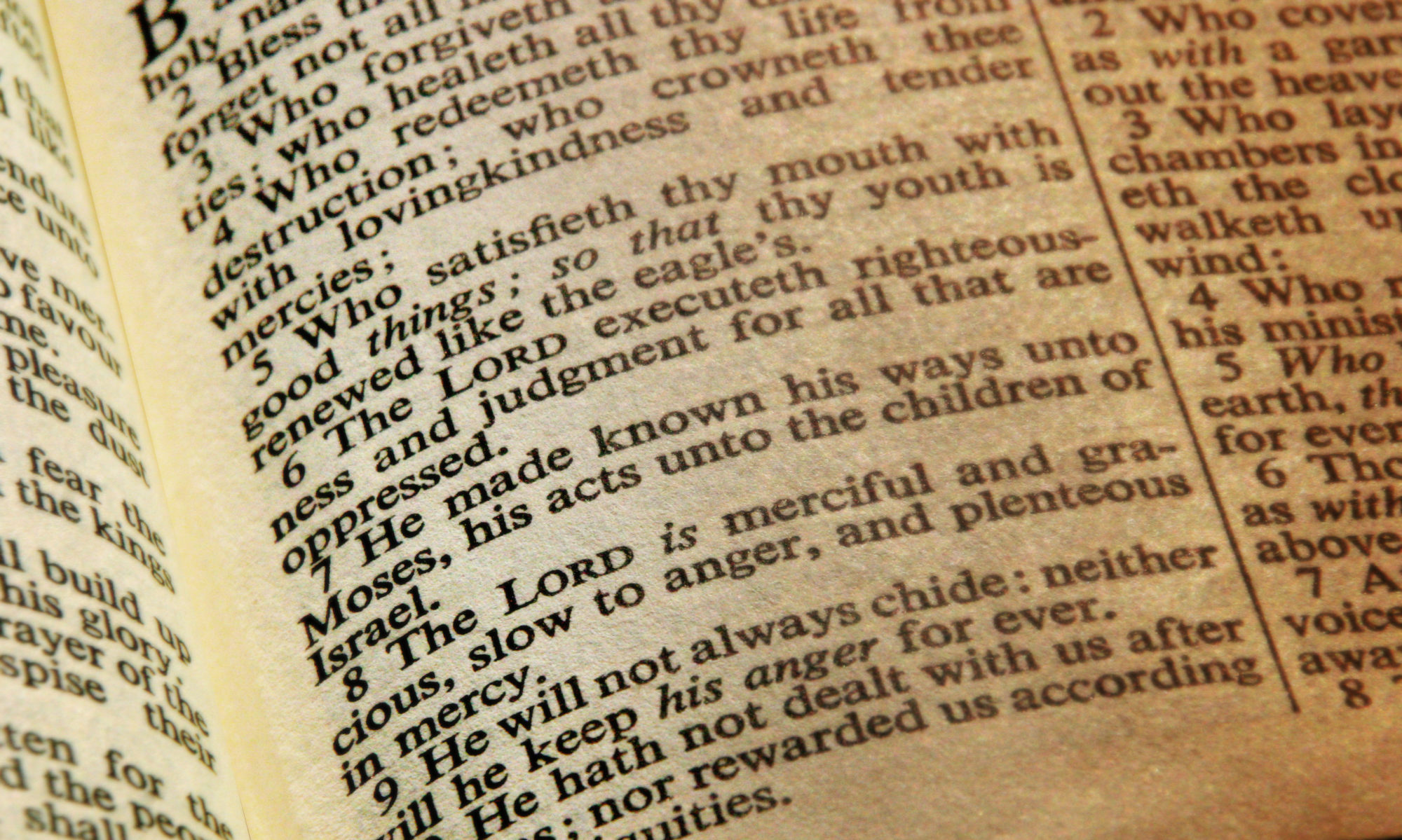
The Hope of Redemption – Psalm 107

This Psalm, from David, recounts the steadfast love of God for the people of Israel – the word is חסד or hesed. It is a story of redemption.

The initial redemption, the foundational rescue event that served as a sign for all the future redemption events, was the rescue of the people of Israel from Egypt and being brought into the Promised Land. This is a common theme throughout the Old Testament, of remembering God’s goodness in and through that moment.

But Psalm 107 looks at a continual redemption, an ongoing story in which God acts as redeemer. David does this through four characters: the wanderer, the prisoner, the fool and the ship captain.

The wanderer calls back to the time the Israelites spent wandering on the wilderness. They had been redeemed out of Egypt, but rejected God’s plan for them to enter the Promised Land and spent 40 years wandering in a circle in the desert. It is us, too, when we wander in our own spiritual circles,

The Psalm says that the Lord will make the way of the wanderer straight, and bring him into the city where he can have rest and safety. David calls these wanderers to be thankful, when we are brought out of whatever wilderness we have wandered in.

Next, we have the prisoner, imprisoned and oppressed because of their own wicked deeds. Again, it calls back to the history of Israel, when rebellion against God would result in discipline through foreign conquerors. The discipline is not there to harm them, but to reorient their perspective and bring them back to God.

Again, this is like us, whether situations of literal imprisonment, or spiritual imprisonment by sin, God is there to forgive and save us from our distress when we cry out to him. Has this happened to us? David instructs us to be thankful.

Then there is the fool, entirely devoted to his own pleasure and desires, even to the extent that they forego food and drink. The fool goes beyond the wanderer and the prisoner in their complete abandonment to sin. But when they hit bottom and cry out to God, once again He comforts, heals and forgives their sin. And again, we who have been the fool are called in to be thankful.

Next, we have the ship captain. Unlike the others, he seems to have things together, and his vice isn’t rebellion or depravity. Instead, it is overconfidence and pride, a belief that they are self-sufficient and is able to chart their own course. This is many of us in our Christianity, trying to live good lives in our own strength, with our own plans and towards our own goals.

But God wants dependent worshipers who live in love and relationship with him. And so he sends mighty waves and storms to remind us that we ultimately cannot survive under our own power. We call out to him and he again redeems us from the storm. Once again, we are to live in gratitude to the Lord who rescues is.

Then in verse 32, David goes into all the ways God works to bring his people back to him – turning rivers into deserts and deserts into pools of water, doing whatever is needed to bring us to redemption. God customizes our redemption to exactly what he wants for us in exactly the ways we need.

For us, we also look back to an original redemption, the salvation brought to us by the death and resurrection of Christ. And we also see ongoing redemption and rescue throughout our lives, whether as wanderer, prisoner, fool or captain. But the rescue is not from our situation, but primarily from our own self-dependence and rebellion.

The rescue will look different for different people. The wanderer is left to their own fumbling devices for a long period of time. The prisoner must have their rebellion crushed and their lives restricted to turn then around. The fool must hit rock bottom before they turn their eyes heavenward. The ship captain must fail on their own so they will depend on God.

This multifaceted, steadfast love has no limits. There is not a set number of redemptions on a cosmic punch card. God’s redemption is bottomless and never ending. We are a forgetful people, and so constantly need reminding of this.

Or maybe we are frustrated and confused that we don’t seem to be moving forward spiritually. We may be moving backwards, and the shame or frustration of that may be keeping us from actually moving forward again. But our spiritual life is not and was never promised to be a steady upward climb. It is a constant forward and back motion, confession and repentance and returning to God. But we cannot wait until we are better to turn to God. We must turn to him before we can get better at all.

Or maybe we have never sought the redemption of God. Maybe we are turned off from it by the public face of Evangelical Christianity on the news and in social media. If you reject the ugly, false pictures of God and Christ being portrayed, then good for you. Seek the God of the scriptures and understand the true Christ and the redemption he offers.

Wherever we are in this story, whatever the reason we need rescue today, we should turn to God and throw ourselves on his mercy. God loves us more than we love ourselves, which means we have a mighty hope.

– Sermon Notes, Brent Rood, Seed Church, November 26, 2017

Psalm 107

Something went wrong with the bible. Please make sure that you are requesting a valid passage! If this problem presits please contact joshuawiecorek@outlook.com


A Psalm of Disorientation – Psalm 143

The psalms can be divided into three types (first done by Walter Bruggemann). First, songs of orientation that in a basic way orient ourselves towards God, casting the world in a simplified form and ourselves as faithful followers. Then, songs of disorientation, when the simple worldview of the initial psalms are upended by confusion, pain and disconnection. Finally, songs of new orientation, the emergence from those times of struggle into a new, more mature relationship with God. Psalm 143 falls best into the disorientation category.

In the psalms, we see various descriptions of human nature: the soul, the real self and appetites; the spirit or breath, our emotions; and our heart, best understood as our mind, the part that is supposed to know right from wrong. Our hearts are broken, and so are ruled by our emotions and appetites, not by that understanding of right and wrong.

Psalm 143 opens and closes with reflection on the righteousness of God. It then moves directly into a request that God not judge the singer based on their deeds. This is directly reversed from psalms of orientation like psalm 7, when he specifically asks to be judged based on his righteous deeds.

He then moves into the meat of the prayer: his enemy is closing in and it is causing emotional turmoil within. It is on one hand a foxhole prayer, written while David is hiding from Saul or the Philistines. On the other hand, the specific enemies are not named, because this is a song written to be sung by many people, all of whom have enemies, whether physical or spiritual.

He comes to God, then (and us with him) thirsty like a parched land. We can easily have our need God dulled by the pleasures of the world, and it is only when that world has fallen apart on us that we truly feel the desperate that within us.

Attached to all this, he hopes that this feeling of abandonment does not mean God has turned His face from him, that this temporal darkness does not have eternal significance.

He then moves into five specific requests, paired with the reason for these requests – notably, not because of his own righteousness. Answer me quickly, do not hide your face, bring me word quickly, show me your will, rescue me from my enemies. The reasons given are not based on David’s abilities (or ours), but rather on the nature of God Himself and the trust that David places in Him.

So David brings faith rather than righteousness. He brings no currency to the transaction, only faith that God will rescue him based on three things: His name’s sake, His righteousness and his unfailing love.

The term “unfailing love” literally means “cut a covenant” with the implication of blood. God specifically made covenants with David, that he would be king, live a long life, that his son would build the temple, and the Messiah would come from his line. For God to keep these promises, God must rescue David from his troubles. From that perspective, it is fairly cold and impersonal. It gets to the unfailing part, but not the love.

The second component to the righteousness of God are the parts of His character that lead him to make these promises to begin with. God is the one who created the relationship with David (and us!) not the other way around. God has rigged the entire situation so that our faith is substituted for righteousness. His righteousness is unfailing in its commitment, and love in its motivation. When David appeals to God’s righteousness, he is appealing to the love and mercy of God, not to His perfection.

What do we learn ourselves from Psalm 143? Primarily, that we can call on God based not on our righteousness, but His. We do not have the individual covenant that David did, but instead we have Christ as our representative. Like David, we have no currency of righteousness. If we, through faith, are linked to Christ, then all the promises of God to Christ fall to us. Through faith, we become the anointed ones, and Christ’s story becomes our story, His unending currency righteousness becomes ours.

This means that the first step in calling on God is to connect ourselves to Christ. We need Him as our mediator. If we have done this but still pray from a place of self-righteousness, entitlement and pride. Are we angry at God for not responding in the way we desire or expect? Are we putting ourselves up as judges of God? Or are we on the other end of the spectrum, disheartened by our own sin, we pray (or fail to pray) out of our own sense of unrighteousness. We are called to boldness, not based on our abilities but on the imputed righteousness of Christ.

As Martin Luther is said to have written:

For feelings come and feelings go, and feelings are deceiving;
My warrant is the Word of God, Nought else is worth believing.
Though all my heart should feel condemned, For want of some sweet token,
There is One greater than my heart, Whose Word cannot be broken.
I’ll trust in God’s unchanging Word, ‘till soul and body sever;
For though all things shall pass away, His Word shall stand forever.

– Sermon Notes, Brent Rood, Seed Church, Lynnwood, WA, August 27, 2017

Psalm 143

Something went wrong with the bible. Please make sure that you are requesting a valid passage! If this problem presits please contact joshuawiecorek@outlook.com